A methamphetamine test result is only as reliable as the sampling strategy behind it. For property owners, buyers, community leaders, and public health stakeholders, the difference between a “clean” report and an accurate one can have significant long-term consequences. A recent case involving a freshly renovated property highlights why understanding what lies beneath the surface is critical for effective risk management.
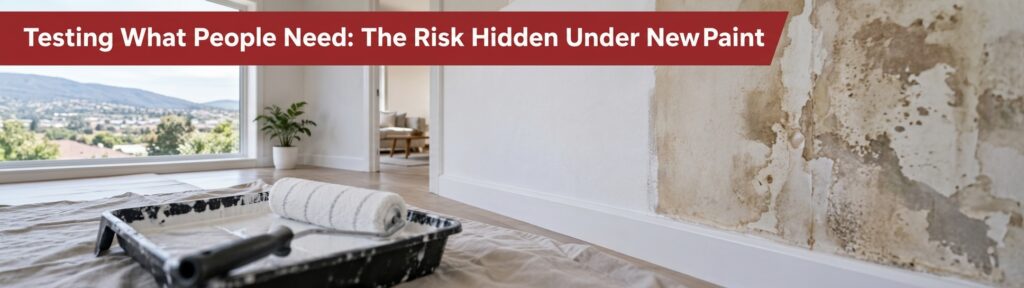
The trap of the freshly painted surface
In November 2025, a property changed hands and underwent a fresh renovation. By June 2026, a meth test report was produced showing a theoretical maximum of 1.6 µg/100 cm² across ten samples. On the surface, this appeared to be a low-risk result. Relying on this information, which was presented by the real estate agent, a prospective purchaser removed the toxicology clause from their offer.
However, a separate assessment conducted just ten days earlier told a completely different story. That test returned a theoretical maximum of 46.8 µg/100 cm² across nine samples.
Why the massive discrepancy? The difference lay in the sampling strategy. One technician sampled newly painted surfaces and recently installed rangehoods. Our technician identified the redecoration and avoided these new materials, instead targeting areas that provided insight into the property history.
Why history matters more than “wants”
It is a common misconception that a new coat of paint resolves a methamphetamine contamination issue. If a property has a history of meth-related behaviour, residues persist. Over time, these residues bleed back through new paint. This means contamination levels increase even if no further meth use occurs in the home.
Sampling newly painted surfaces or brand-new extraction fans provides no insight into the underlying condition of the building. It offers a “want” – a low number that facilitates a smooth transaction – rather than the “need” for an honest assessment of potential harm and future liability.
The cost of ignoring the “outlier”
When faced with conflicting reports, there is a temptation to dismiss the higher result as an “outlier”. In this case, a third test in September 2026 again focused on newly introduced equipment and painted surfaces to produce a low result.
Buyers often trust the information presented to them and take these reports at face value. However, the levels identified in the higher report indicate the true extent of the contamination. Ignoring this evidence does not make the risk go away; it simply transfers the financial and health burden to the new occupants. In this instance, the purchaser who was helped to exit the deal felt deliberately misled.
When the underlying issue is not understood, the consequences include:
- Unexpected remediation costs in the tens of thousands of dollars.
- Potential health impacts for families, such as respiratory issues or skin irritation.
- Insurance complications, as many policies require an accurate understanding of a property’s status to remain valid.
Protecting the stakeholders
This situation, which will likely result in a complaint to the Real Estate Authority, could have been avoided. Real estate professionals have a responsibility to be aware of red flags, as per REA advice. In this case, there were plenty. Reducing harm requires a commitment to transparency and sampling strategies that reveal the truth rather than hiding it.
For buyers and renters, the lesson is clear: if a property has a fresh coat of paint, you must ask what lies beneath. For community leaders and public health stakeholders, this case reinforces that methamphetamine is a structural housing issue.
The goal of professional testing is not to produce the lowest possible number. It is to provide a meaningful starting point for an honest conversation about safety, stability, and the long-term health of the New Zealand housing stock.